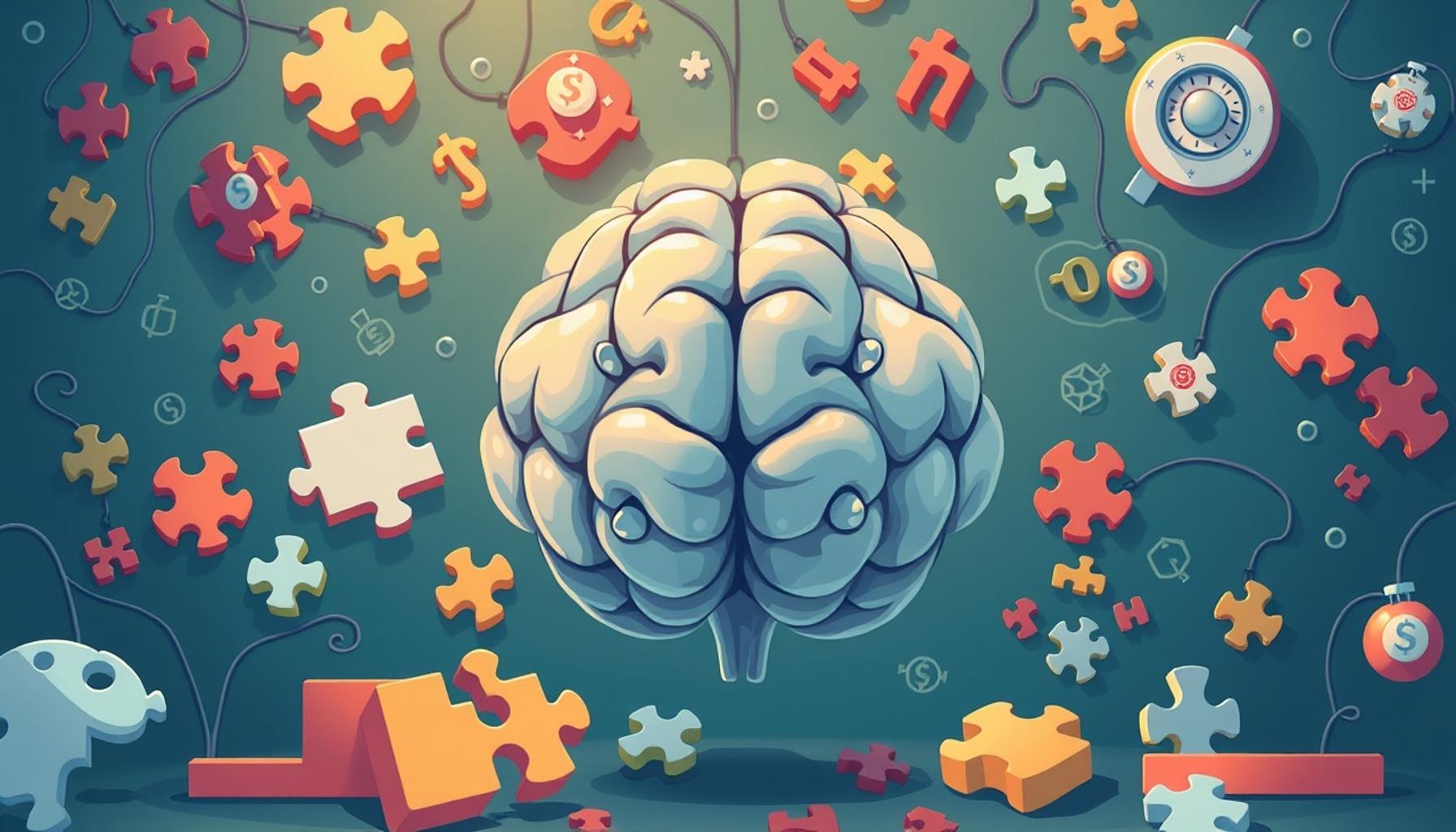
Problem-Solving Strategies: How Logic Games Stimulate Critical Thinking
Unlocking the Brain’s Potential
In an increasingly complex world, problem-solving skills are more essential than ever. The ability to think critically and solve problems efficiently can mean the difference between success and failure, whether in personal life or professional endeavors. Logic games offer a unique avenue for enhancing these skills while simultaneously stimulating critical thinking. As individuals engage with challenging puzzles and strategic gameplay, they discover new perspectives on problem-solving that can be applied both theoretically and in real-life scenarios.
Why Logic Games Matter
These games do not just entertain; they serve several key purposes that contribute to cognitive development.
- Enhance Cognitive Abilities: Logic games require players to employ strategic thought processes, which can significantly enhance memory and processing skills. For instance, playing games such as Sudoku or chess engages different parts of the brain, causing pathways to strengthen and grow more efficient.
- Encourage Innovative Thinking: Players must think outside the box to solve puzzles, nudging them toward creative problem-solving techniques. A classic example is the Rubik’s Cube, which challenges individuals to visualize and manipulate pieces spatially while forming a coherent strategy to achieve a goal.
- Promote Patience and Perseverance: Tackling difficult challenges through logic games develops resilience and determination. For example, a player might struggle with a seemingly unsolvable riddle, but with persistence, they often reach a solution—mirroring many real-life problems where perseverance leads to breakthroughs.
From classic chess matches played on wooden boards to modern digital puzzle apps like Lumosity and Brain Age, logic games come in various forms. They offer layers of complexity, making them suitable for all ages. The accessibility of these games proves that anyone, regardless of their background or experience, can enhance their problem-solving capabilities through dedicated practice.
Real-World Application
Engaging in these games can translate into significant real-world opportunities. Improved problem-solving skills foster enhanced teamwork and communication in group settings, which are crucial in professional environments. For instance, many employers seek candidates who can not only analyze complex data but also collaborate effectively with teams to devise solutions. Logic games can serve as excellent icebreakers in team-building activities, encouraging collaboration and collective problem-solving.
As we delve deeper into the myriad benefits of logic games, we discover how these activities can fundamentally alter our approach to problem-solving. By transcending simple entertainment, they reveal pathways to improved cognitive function, creative thinking, and collaboration. Join us in exploring this fascinating connection between play and mental development, and discover how you can unlock your brain’s potential by embracing the world of logic games.
Understanding the Mechanics of Logic Games
The allure of logic games lies not only in their challenge but in how they intricately weave together entertainment and educational value. At their core, these games are structured exercises that tap into the cognitive processes of analysis, deduction, and reasoning. Engaging with these puzzles requires players to deconstruct problems into manageable parts, leading them toward effective solutions. This fundamental ability empowers individuals in varied aspects of life, honing their skillset for a more analytically-driven existence.
The Science Behind Logical Thinking
Delving further into the concept of critical thinking, logic games provide a unique intersection where play meets cognitive science. Research has shown that people who regularly engage in logic games tend to exhibit higher levels of cognitive flexibility, the mental ability to switch between thinking about different concepts. This flexibility transforms how players approach multifaceted problems, allowing them to consider multiple perspectives before arriving at a conclusion.
As participants engage in games such as logic grid puzzles, crossword puzzles, or strategic games like Settlers of Catan, several key mechanisms contribute to their enhanced problem-solving abilities:
- Pattern Recognition: One of the core elements in many logic games is the ability to identify and utilize patterns. This skill transfers to everyday problem-solving, allowing individuals to spot trends or anomalies in data, facilitating quicker and more accurate decisions.
- Strategic Planning: Many logic games require advanced planning and foresight, teaching players to think several steps ahead. This capability can significantly influence how they handle challenges in both personal and professional contexts, as they learn to anticipate potential obstacles.
- Risk Assessment: Logic games often involve weighing the pros and cons of various moves. By evaluating risk versus reward in a controlled environment, players develop the ability to assess risks more effectively in real-life scenarios, leading to more informed decision-making.
Moreover, the rise of digital logic games—accessible through smartphones and tablets—has made these mental exercises more engaging and adaptable to modern lifestyles. Popular applications have taken conventional games like Sudoku and transformed them into interactive experiences, often equipped with tutorials and adaptive difficulty levels that help players advance their skills. This accessibility means that fostering critical thinking through logic games is now achievable for a broader audience than ever before.
Building a Foundation for Future Learning
Engagement with logic games provides more than just immediate cognitive enhancement; it lays a foundation for lifelong learning. As players develop their ability to tackle increasingly complex problems, they instill habits of curiosity and deep thinking. These attributes are invaluable in educational settings, where critical thinking and problem-solving are recognized as essential competencies for success.
As we continue to explore the multifaceted benefits of logic games, it becomes clear that these activities are more than mere pastimes. They sharpen the mind and provide valuable tools for navigating the complexities of both work and life. The implications of improved critical thinking stretch far beyond the gaming screen, allowing for a more enriched and agile cognitive landscape. Join us as we delve into specific examples of how these strategies manifest in everyday situations, revealing the broader impact of logic games on our daily lives.
| Advantage | Description |
|---|---|
| Enhanced Problem-Solving Skills | Logic games introduce players to complex scenarios that require critical analysis and deep reasoning, fostering enhanced skills in navigating challenges. |
| Increased Cognitive Flexibility | Participants learn to adapt their strategies, encouraging creative thinking and innovative problem-solving approaches that are crucial in real-life situations. |
Engaging with logic games not only makes for an entertaining pastime but also contributes significantly to personal development. Players often face unexpected challenges, pushing them to think critically and revise their tactics accordingly. By presenting both predictable and unpredictable elements, these games cultivate a dynamic mindset, helping individuals adapt when confronted with novel problems in various contexts.Logic games also encourage social interaction, fostering teamwork and collaboration. When played in groups, participants share diverse perspectives and collective reasoning, which can lead to deeper insights and enhanced critical thinking skills. This group dynamic showcases the importance of collaboration in problem-solving, reminding players that different viewpoints can enhance their overall understanding and approach to complex tasks. The process of navigating through these games can reveal valuable lessons about making decisions under pressure, assessing risks, and evaluating possible outcomes, making them an ideal tool for honing one’s analytical capabilities.
The Real-World Application of Logic Games
As we examine the benefits of logic games further, it’s essential to recognize how the skills honed through these activities translate to real-world scenarios. Players often find that the critical thinking abilities developed in a gaming context enhance their performance across a wide array of decision-making situations. The relevance of these games extends to educational institutions, workplaces, and even day-to-day life, where sound problem-solving strategies are crucial.
Enhancing Academic Performance
In educational settings, logic games provide a valuable resource for students. Research indicates that students who engage with logic and puzzle games show improved test scores in mathematics and science—subjects that demand critical thinking and analytical reasoning. For example, games like KenKen and Sudoku encourage students to visualize problems and experiment with solutions, laying the groundwork for complex mathematical concepts.
Furthermore, educators are increasingly incorporating logic games into their curricula as a means to develop higher-order thinking skills. By utilizing these games, teachers can create a more interactive and stimulating environment that nurtures students’ abilities to think independently and collaboratively. As they grapple with challenging puzzles, students also learn the importance of perseverance, often revisiting problems until they arrive at a solution—an essential facet of learning in any discipline.
Sharpening Professional Skills
In the workplace, problem-solving skills are not only valued but often necessary for career advancement. Employees adept in logic games exhibit enhanced analytical skills which can significantly benefit fields like business analytics, IT, and engineering. For example, strategic board games like Chess require players to contemplate not only their current moves but also to predict their opponents’ actions, fostering a mindset geared towards tactical thinking.
Moreover, collaborative logic games such as Escape Rooms or team-based strategy games can improve teamwork and communication skills, as players must share insights and devise solutions collectively. These experiences not only refine individual cognitive abilities but also cultivate a supportive environment where innovative solutions can thrive, fostering a culture of creativity and adaptability—a crucial asset in today’s rapidly evolving job market.
Everyday Decision-Making
Logic games also play a crucial role in everyday decision-making processes. The skills acquired from playing these games can manifest in daily tasks, from budgeting finances to planning travel itineraries. The capacity to think critically allows individuals to prioritize, organize, and evaluate their options effectively. For instance, when faced with a significant purchase, individuals drawn to logic games might methodically weigh the pros and cons, carefully assessing potential benefits against costs, ultimately leading to informed choices.
Additionally, research published in psychology journals highlights that individuals who engage in logic-based activities tend to exhibit improved emotional regulation and problem resolution in high-stress environments. By instilling a composed and analytical mindset, players can better navigate the complexities of personal and professional dilemmas.
The impact of logic games transcends entertainment, illuminating their capacity to shape our cognitive landscape. As we continue to peel back layers on this subject, it becomes evident that these games serve as a fertile ground for nurturing critical thinking, with implications that resonate profoundly within educational and professional realms alike.
Conclusion: The Transformative Power of Logic Games
In summary, the exploration of problem-solving strategies through logic games reveals a compelling landscape where cognitive development merges with practical application. These games not only serve as a source of entertainment but are potent tools for enhancing critical thinking skills essential for success in today’s multifaceted world. The correlation between regular engagement with logic games and improvements in academic performance cannot be overlooked; students who embrace these challenges often exhibit enhanced analytical capabilities, as seen in better outcomes in STEM disciplines.
Furthermore, the skills acquired through logic games extend significantly into professional settings, where the ability to approach complex problems methodically can differentiate between career stagnation and advancement. By improving strategic thinking and collaboration, these games cultivate an environment where creativity and adaptability thrive—qualities that are increasingly critical in a fast-changing job market.
Moreover, the everyday decision-making prowess acquired from logic games empowers individuals to navigate life’s challenges with confidence and deliberation. As stressors arise, those familiar with logic-based activities demonstrate greater emotional regulation and problem-solving capabilities, ultimately leading to more favorable outcomes in both personal and professional realms.
As we continue to unravel the many layers of logic games, it becomes increasingly clear that these activities are not merely pastimes. They offer invaluable lessons and sharpen the critical thinking skills needed in every facet of life. Investing time in logic games represents a proactive approach to developing a mindset equipped to tackle challenges, promote learning, and foster innovative solutions. Therefore, embracing these games might just be one of the most rewarding strategies we can adopt for lifelong learning and growth.