Cultural Perspectives on Puzzles: How Different Societies Approach Brain Challenges
Understanding Global Puzzle Dynamics
Puzzles have long served as a window into the rich tapestry of human culture. They are not just entertaining brain exercises; they provide a fascinating lens through which we can view different values, customs, and thought processes. As we engage with brain challenges from various cultures, we gain insight into how these activities reflect societal priorities and cognitive styles, ultimately uniting people through their need for intellectual stimulation.
Japanese Sudoku
Emerging from Japan in the late 20th century, Sudoku has made its mark as a global sensation. This logic-based number puzzle invites players to fill a 9×9 grid with digits so that each row, column, and 3×3 subgrid contains all digits from 1 to 9. The appeal of Sudoku lies in its simplicity and the mental rigor it requires. In Japan, where emphasis is placed on education and logical reasoning, Sudoku has become a staple in schools and newspapers, fostering a culture of problem-solving. Major competitions and dedicated puzzle magazines are also common, making Sudoku not only a pastime but a cultural phenomenon that encourages cognitive development and community interaction.
Western Jigsaw Puzzles
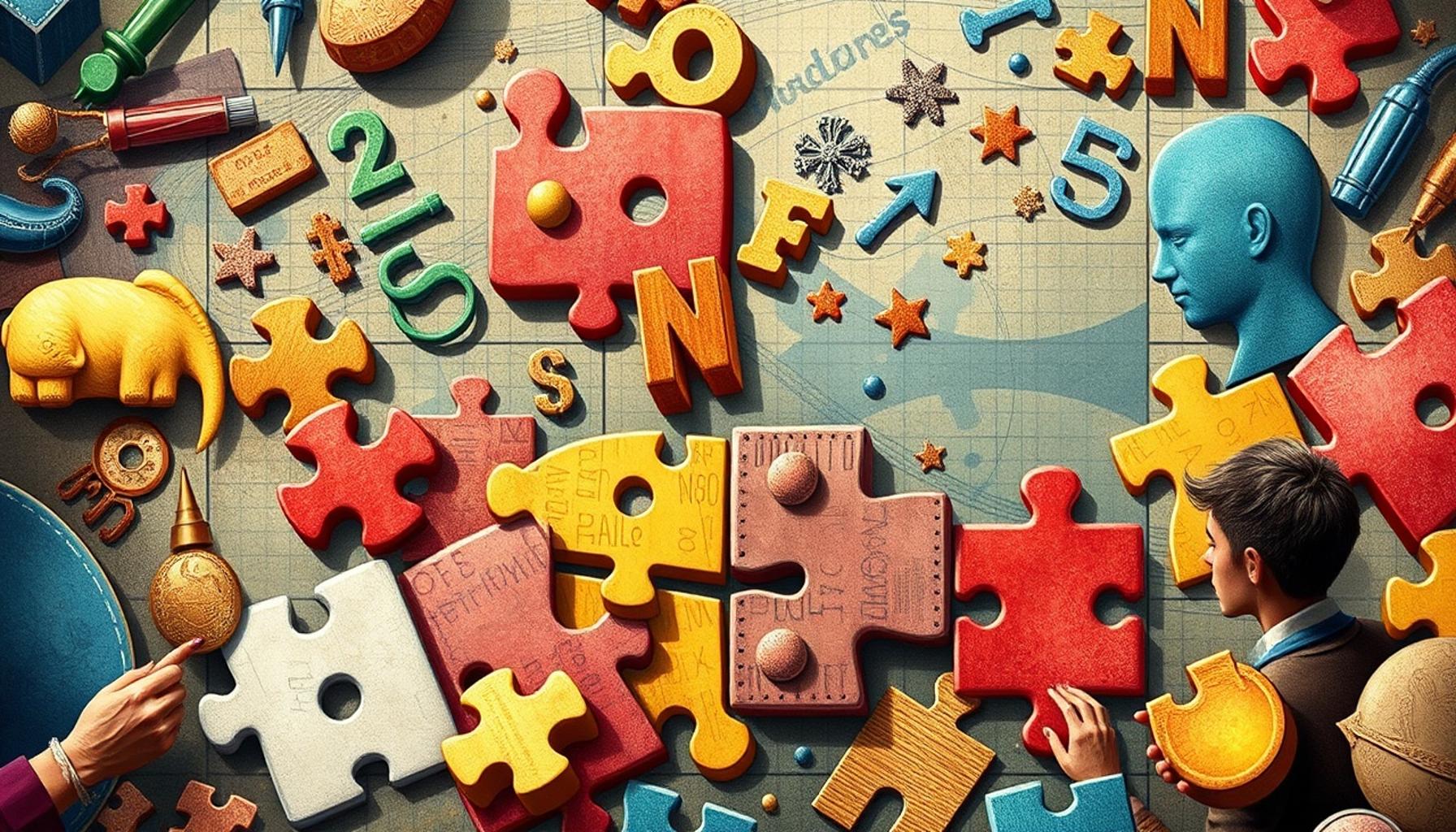
In the Western world, particularly in the United States, jigsaw puzzles hold a special place in many households. These puzzles, comprised of myriad interlocking pieces, challenge visual-spatial skills and often encourage teamwork. Families frequently bond over assembling a jigsaw puzzle, turning what could be a solitary task into a social event. The tradition of working on these puzzles has caught the attention of many, resulting in gatherings during holidays or weekends, where conversations flow as pieces are carefully fitted together. Furthermore, the variety in themes—from scenic landscapes to favorite movies—demonstrates how these puzzles can serve as cultural artifacts reflecting popular interests and nostalgia.
Chinese Chess (Xiangqi)
Xiangqi, or Chinese Chess, offers a glimpse into the strategic mindsets inherent to Chinese culture. This game, which includes two opposing armies on a board marked by a river and fortifications, emphasizes tactical foresight, patience, and psychological warfare. Players are challenged to think several moves ahead, showcasing a deep-rooted appreciation for strategy. Its portrayal in parks and streets, where spectators often gather to watch intense matches, underscores its social nature. Engaging with Xiangqi can reveal the importance placed on competition, respect for intellectual prowess, and the communal experience of sharing a game.
Exploring these diverse brain challenges illuminates not just the games themselves but the cultural identities intertwined within them. Engaging with puzzles offers a bridge to understanding how cognitive styles differ across societies and what values those societies hold dear. As individuals reflect on their personal interactions with puzzles, they may find themselves drawn to explore how these activities mirror broader human experiences across the globe.
Diverse Puzzle Strategies: A Comparative View
As we delve deeper into the realm of puzzles, it becomes increasingly clear that the approach to these brain challenges varies significantly across cultures. Each type of puzzle not only tests cognitive abilities but also acts as a cultural artifact that reflects the unique societal norms, values, and traditions of the people who engage with them. By examining how different societies tackle puzzles, we can uncover layers of meaning that exist beyond mere entertainment.
Indian Chess (Chaturanga)
The ancient game of Chaturanga, a precursor to modern chess, highlights the rich history and intellectual depth inherent in Indian culture. Originating around the 6th century, Chaturanga is played on an 8×8 board, and each piece has a distinct range of movement, encouraging strategic planning and critical thinking. In India, the game is celebrated not only as a test of skill but also as an art form, often represented in literature and traditional folk stories. In cities and villages alike, it’s common to find players engaged in fierce matches, illustrating the nation’s long-standing affection for strategy and problem-solving.
Crosswords in English-Speaking Countries
Another fascinating brain challenge that has captivated English-speaking countries, particularly in the United States and the United Kingdom, is the crossword puzzle. With their firm roots in the early 20th century, these word puzzles combine elements of vocabulary, general knowledge, and lateral thinking. Newspapers often feature daily puzzles, making crosswords a staple of morning routines for many. The cultural relevance of crosswords can be seen through their incorporation of regional expressions, idioms, and pop culture references, creating a shared experience that resonates with readers. In fact, competitive crossword tournaments, such as the American Crossword Puzzle Tournament, attract enthusiasts from various backgrounds, emphasizing a communal appreciation for language and intellectual challenge.
Moroccan Riddles
In Morocco, the tradition of riddles stands out as a unique form of puzzle that fosters communal engagement. Often shared verbally, these riddles encapsulate moral lessons or cultural narratives, offering not just entertainment but also a means of preserving history. Families and friends often gather to exchange riddles during social gatherings, creating a lively atmosphere where storytelling and wit intertwine. This practice reflects the importance of verbal skills and ingenuity within Moroccan culture, showcasing how puzzles can serve as a tool for teaching and bonding.
In summation, the diverse landscape of puzzles across cultures reveals much about societal constructs and values. Whether through logical reasoning, strategy, or linguistic skill, these brain challenges connect individuals while also reflecting their cultural origins and shared experiences. Exploring these different perspectives invites deeper understanding and appreciation of the intricate threads that weave through our global tapestry.
| Cultural Influence | Approach to Puzzles |
|---|---|
| East Asian Cultures | Emphasize communal problem-solving and holistic thinking. |
| Western Cultures | Focus on individualistic approaches, often emphasizing competition. |
| Indigenous Societies | Utilize storytelling and social interaction as problem-solving tools. |
| Middle Eastern Cultures | Often integrate puzzles within poetic narratives and oral traditions. |
Puzzles, across the globe, serve as a fascinating lens through which we can explore cultural identity and social values. In East Asian cultures, for instance, the collective approach to brain challenges emphasizes community engagement, where solving puzzles often becomes a shared experience, bringing peers together. Holistic thinking is encouraged, allowing for diverse perspectives to emerge, enriching the problem-solving process.Conversely, in many Western societies, the focus often shifts toward individual skill and competition. Here, brain challenges are frequently regarded as a measure of personal ability, fostering a sense of achievement that drives innovation. This duality in approach highlights the varying importance different cultures place on cooperation versus competition. Furthermore, indigenous societies ingeniously weave problem-solving techniques into their storytelling traditions, which not only preserves cultural heritage but also engages younger generations in the art of critical thinking. This storytelling aspect conveys a vital lesson: complexity in puzzles can mirror the complexities of life itself.Lastly, in Middle Eastern cultures, puzzles often manifest within rich poetic narratives that underscore the intersection of intellect and art. Each societal approach to brain challenges paints a broader picture of how cognitive engagement can be both a personal venture and a collective journey, prompting further exploration into how these differences shape our understanding of intelligence.
Puzzles as Cultural Narratives: Insights from Around the World
In continuing to explore the cultural significance of puzzles globally, it becomes evident that many societies utilize these brain challenges not merely for entertainment but as a medium to convey stories, morals, and life lessons. Different types of puzzles can be seen as reflections of societal values, forming a bridge between generations while fostering critical thinking.
Japanese Sudoku
In Japan, the popularity of Sudoku provides a remarkable glimpse into the Japanese approach to logic and problem-solving. Introduced in the 1980s, Sudoku puzzles involve filling a 9×9 grid, ensuring that each row, column, and subgrid contains all numbers from 1 to 9 without repetition. This puzzle format emphasizes a methodical and disciplined way of thinking, characteristics highly valued in Japanese society. With daily newspapers and online platforms dedicating sections to Sudoku, it has evolved into a popular pastime, drawing people together in community-solving events, thereby merging social interaction with intellectual challenge.
Chinese Tangrams
The Tangram, a quintessential Chinese puzzle that dates back to the Song dynasty, comprises seven geometric pieces called tans, which can be rearranged to form various shapes. This ancient puzzle serves as a means of promoting creativity and visual-spatial reasoning, allowing individuals to explore artistic expression through structured forms. In Chinese culture, Tangrams are often used in educational settings, showcasing their role as a valuable tool for enhancing cognitive skills among the youth. Moreover, the puzzle’s emphasis on balance and harmony aligns with broader philosophical concepts within Chinese traditions, making it an engaging activity that is steeped in cultural symbolism.
American Jigsaw Puzzles
Transitioning to the western hemisphere, the jigsaw puzzle holds a special place in American culture. Originally popularized in the 18th century, these puzzles have transformed from wooden maps to contemporary cardboard varieties adorned with captivating imagery. Jigsaw puzzles serve as a symbol of unity and collaboration, with family and friends often coming together to piece them together—literally and metaphorically. The phenomenon of competitive jigsaw solving has even taken off, with events and championships drawing in large crowds, highlighting the shared human experience of problem-solving under time constraints. This reflects the American spirit of competition and community building through shared challenges.
Scandinavian Logic Puzzles
In Scandinavia, logic puzzles like the popular nonogram or “griddler” exemplify a culturally rooted approach to numerical reasoning and deduction. These puzzles require solvers to fill in squares on a grid based on numerical hints, blending elements of art with logic. The cultural love for minimalism and efficiency in Scandinavian design is mirrored in the simplicity yet complexity of nonograms. These logical brain teasers are commonly featured in Scandinavian newspapers and online forums, promoting critical thinking as an integral part of cultural education.
Across various societies, puzzles serve as a rich tapestry of cultural expression, reflecting unique perspectives on intellect, tradition, and community engagement. By engaging with different types of puzzles, individuals not only hone their cognitive abilities but also participate in a global dialogue about the significance of problem-solving in daily life. This cultural exploration underscores the diverse ways in which puzzles resonate with and enrich the fabric of society.
Conclusion: Diverse Cultural Tapestry of Puzzles
In exploring the myriad ways cultures engage with puzzles, it becomes clear that these brain challenges serve a dual purpose: fostering cognitive development while reflecting societal values and traditions. From the logical structure of Sudoku in Japan to the artistic expression promoted by Tangrams in China, each puzzle type embodies a unique cultural narrative that enriches personal and communal identities. Similarly, the jigsaw puzzles prevalent in American households highlight the spirit of collaboration and competition, while Scandinavian logic puzzles emphasize efficiency and critical reasoning in a minimalist approach.
The global nature of puzzles illustrates not only the diversity of thought but also how problem-solving transcends borders, creating a shared language of discovery and innovation. As individuals partake in these brain challenges, they are invited to experience a microcosm of different cultures, gaining insights into varying worldviews and educational philosophies. This encourages a deeper appreciation for the role of puzzles in shaping societal norms and fostering connections across generations.
Ultimately, puzzles are not just a pastime; they are a lens through which one can observe and engage with the world. By participating in this vibrant exchange, we can cultivate our problem-solving skills, enrich our understanding of different cultures, and forge bonds with others, making the pursuit of puzzles a valuable endeavor in our increasingly interconnected society. To delve deeper into these intricate puzzles and discover the stories they hold is to embark on an enlightening journey of cultural exploration.