How Game Theory Can Improve Your Puzzle Skills
Unlocking the Secrets of Puzzles with Game Theory
Puzzles and games have long been celebrated for their role in enhancing cognitive skills, inviting players to engage in complex challenges that stimulate the mind. Game theory, a mathematical framework that studies strategic interactions among rational decision-makers, can significantly elevate your puzzle-solving abilities. This approach not only provides strategic insights but also fosters a deeper understanding of how individual choices impact collective outcomes.
Strategic Thinking
At the core of game theory is the concept of strategic thinking. Players are encouraged to analyze various strategies and consider potential moves by opponents. For example, in a classic game of chess, a player must think several moves ahead, anticipating not only their own strategy but also predicting their opponent’s responses. This foresight is critical in puzzles like Sudoku or logic grids, where the ability to foresee potential outcomes can lead to a faster resolution.
Collaboration vs. Competition
An essential insight from game theory involves understanding the dynamics of collaboration versus competition. In competitive scenarios like crossword puzzles, individual players may race against the clock or each other, utilizing their own knowledge and skills to claim victory. Conversely, many puzzles—such as escape rooms—encourage a collaborative approach, where team members must communicate and share insights to solve challenges. Recognizing when to cooperate or compete can greatly optimize problem-solving techniques, allowing participants to navigate challenges more efficiently.
Patterns and Predictions
Another significant benefit of employing game-theoretical principles is the ability to recognize patterns and make predictions. Identifying recurring patterns helps in puzzles like 2048 or Rubik’s Cube, where strategic placements and moves can lead to quicker solutions. For instance, mastering the algorithms that solve the cube not only enhances individual performance but also showcases how game theory can help predict successful movements based on established patterns.
By integrating these elements of game theory, puzzlers can sharpen their approaches to various challenges and tackle them with increased effectiveness. As the world of gaming evolves, incorporating game theory into your skill set will become increasingly crucial for both recreational and competitive settings. These principles can transform a simple puzzle into a tactical exercise, enhancing not only personal skills but also deepening engagement with the gaming community. Explore the fascinating world of game theory and unlock the potential to elevate your puzzling expertise.
Enhancing Problem-Solving Strategies
One of the primary benefits of applying game theory to puzzle-solving is the enhancement of problem-solving strategies. By understanding the underlying principles of strategic decision-making, players can approach puzzles with a more analytical mindset. This includes dissecting puzzles into manageable parts, evaluating potential strategies, and implementing solutions in a methodical manner. The skills developed through game theory are particularly useful in a variety of puzzles, from simple brain teasers to intricate escape room challenges.
Creating Decision Trees
A key technique in game theory is the creation of decision trees. These visual representations help players map out potential moves and outcomes, allowing them to evaluate the consequences of each choice. In the context of puzzles, constructing a decision tree can streamline the problem-solving process. For example, when faced with a jigsaw puzzle, a player can visualize different sections to piece together, ensuring they focus their efforts on the most promising areas first. This systematic approach not only reduces frustration but also accelerates completion times.
Understanding Payoffs
In game theory, the concept of payoffs refers to the outcomes associated with different strategies or choices. In puzzles, understanding potential payoffs can influence decision-making. For instance, when approaching a multi-step logic puzzle, players must decide which moves yield the greatest advantage, weighing the benefits of each choice. By considering the payoffs, puzzlers can prioritize strategies that lead to efficient and successful resolutions. To illustrate, here’s a simple breakdown of how payoffs can apply:
- High Reward Moves: These types of moves offer significant progress, such as solving a complex part of the puzzle.
- Low Risk Moves: These moves ensure safety, maintaining current progress without jeopardizing the outcome.
- Optimal Combinations: These explore combinations that maximize both reward and minimize risk, often leading to rapid advancement.
Embracing Uncertainty
Game theory teaches players to embrace uncertainty, a skill that can be extremely beneficial when encountering challenging puzzles. Often, puzzlers face incomplete information or ambiguous clues, where the ability to adapt becomes crucial. For example, in a timed crossword competition, a player may have to solve various clues without complete confidence about their answers. Utilizing principles from game theory allows them to remain agile, assessing new information and adjusting strategies accordingly. This fluid approach enhances resilience and fosters a more enjoyable puzzling experience.
In summary, incorporating game theory into your puzzle-solving toolkit offers a wealth of strategic advantages. From constructing decision trees to understanding payoffs and navigating uncertainty, these skills can dramatically improve your approach to a range of puzzles. As you delve deeper into the fascinating intersection of game theory and puzzles, you’ll find yourself becoming not just a better puzzler, but also a more strategic thinker in everyday challenges.
Understanding Game Theory in Puzzles
Game theory, a mathematical framework for strategic interactions among rational decision-makers, offers profound insights into puzzle-solving. By recognizing the various strategies and potential outcomes inherent in puzzles, players can enhance their approach to problem-solving.
Key Concepts of Game Theory
Understanding concepts like dominant strategies and Nash equilibrium can significantly sharpen your puzzle skills. A dominant strategy is one that is best for a player regardless of what the other players choose. In puzzles, identifying a dominant strategy can lead to quicker and more effective solutions. Similarly, the Nash equilibrium helps players understand where their strategies align with others, providing an edge in collaborative puzzles or competitive environments.
Application of Game Theory in Puzzles
When approaching complex puzzles, utilizing game theory allows for better decision-making. For example, when faced with a challenging Sudoku, analyzing possible outcomes and employing strategic elimination can drastically decrease completion time. This analytical approach is particularly useful in multiplayer puzzles, where anticipating opponents’ moves becomes crucial.Incorporating game theory principles enhances not just the enjoyment of puzzles but also fosters critical thinking skills applicable in various life scenarios, from business negotiations to personal decisions. As you explore the intricate connections between game theory and puzzles, you’ll discover a unique method to refine your problem-solving abilities while having fun.
| Advantage | Description |
|---|---|
| Enhanced Strategy | Game theory encourages players to identify optimal strategies, leading to efficient puzzle-solving. |
| Critical Thinking | Understanding game theory promotes analytical thinking, essential for tackling challenging puzzles. |
Collaboration and Competition
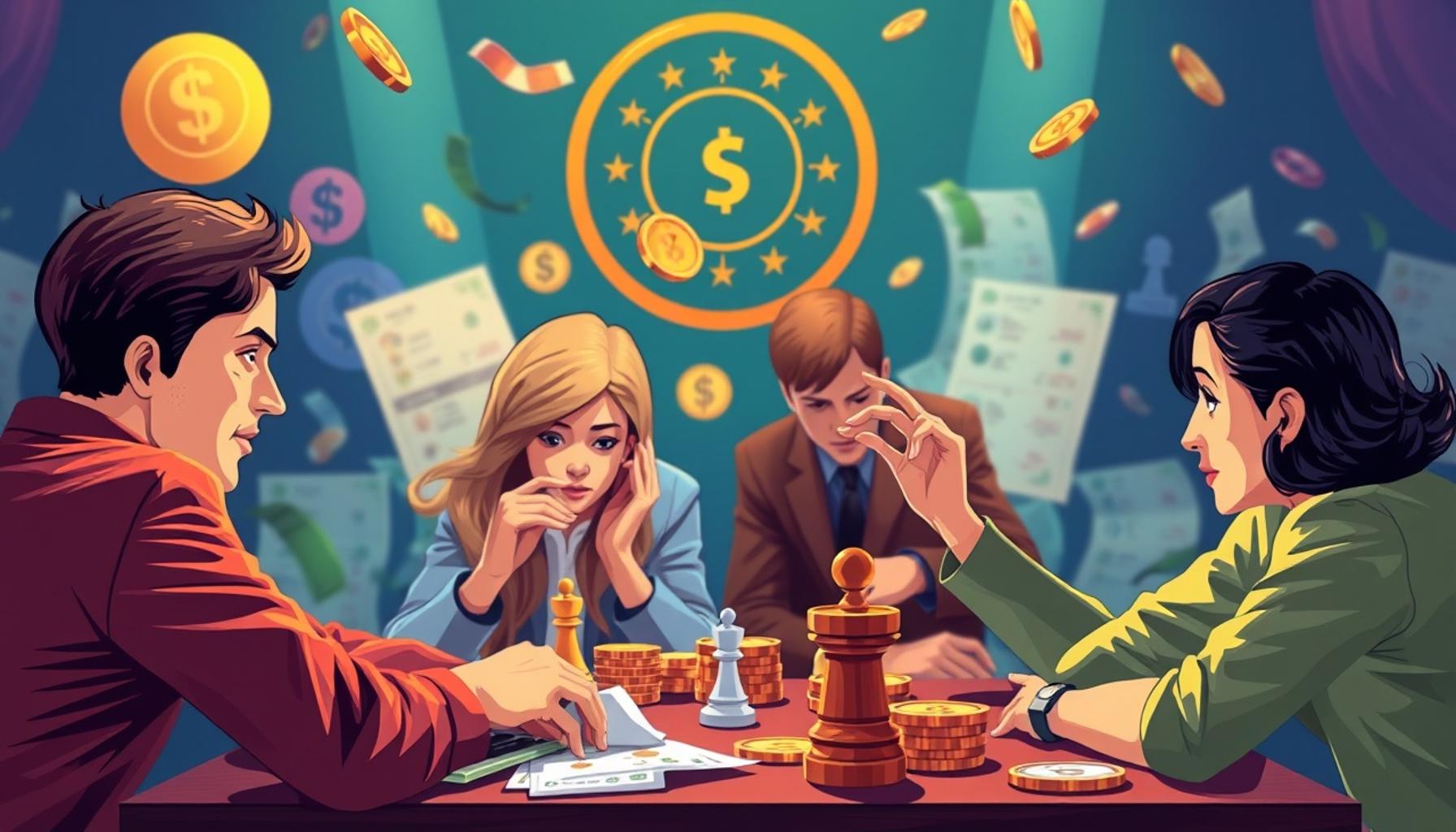
Understanding the dynamics of collaboration and competition in game theory can significantly enhance puzzle-solving skills, particularly in team-based or multiplayer scenarios. Many puzzles, especially in escape rooms or cooperative board games, require players to work together while also negotiating personal strategies. By applying game theory, players can better navigate these interactions, leading to more effective communication and faster problem-solving.
Building Cooperative Strategies
In cooperative puzzles, such as team quizzes or group crossword challenges, understanding game theory helps participants identify how to share information and resources effectively. For instance, if team members are each tasked with solving different sections of a puzzle, players can maximize their combined strengths by assessing which tasks align best with individual skills. A player who excels in logic may take on challenging riddles, while another who is good at pattern recognition handles spatial puzzles. By leveraging each other’s strengths, teams can enhance their overall performance and achieve success more efficiently.
Analyzing Competitive Situations
Conversely, in competitive puzzle environments—like timed puzzle races—the insights drawn from game theory can guide participants through tactical decision-making. Understanding potential opponents’ strategies can help players anticipate moves and create counter-strategies. For instance, in a puzzle competition where time is of the essence, a player might decide to first tackle sections of a puzzle that they believe their competitors will struggle with, thereby gaining an early lead. Recognizing when to play aggressively to maximize advantage or when to adopt a defensive stance can make a critical difference.
Simplifying Complex Problems
At times, puzzles become overwhelmingly complex, and this can lead to a standstill. Game theory offers tools to simplify problems and identify the crucial elements that require focus. Using concepts such as Nash Equilibrium, players can evaluate the best strategies where players’ choices are mutually beneficial. In the case of a complex logic puzzle, determining the most logical initial value can help set the framework for solving the entire puzzle by breaking it down into smaller, more manageable tasks. This not only mitigates feelings of being overwhelmed but also provides a clear path forward.
Real-Life Applications of Game Theory in Puzzles
The practical applications of game theory go beyond just game settings. Many puzzle enthusiasts have found that techniques derived from game theory can be applied to everyday problem-solving scenarios. For instance, learning how to negotiate effectively in business meetings or optimizing strategies in a project management context resonates with the principles learned through puzzle-solving techniques. Moreover, engaging with money-based puzzles like poker or investment simulations can enhance strategic thinking and risk assessment, vital skills in both personal finance and corporate environments.
Ultimately, the intersection of game theory and puzzle-solving is rich with potential for developing versatile skills applicable in various areas of life. Embracing the nuances of collaboration and competition, while adeptly handling complex problems through a strategic lens, will elevate one’s puzzle skills and foster a more insightful approach to decision-making in all aspects of life.
Conclusion
In today’s fast-paced world, the principles of game theory present an invaluable toolkit for enhancing not just puzzle-solving skills, but also overall strategic thinking. By understanding the dynamics of collaboration and competition, individuals can navigate both cooperative and competitive environments more effectively. The ability to draw from each team member’s strengths in cooperative scenarios leads to improved communication and problem resolution, while being attuned to opponents’ strategies can grant a crucial edge in competitive puzzles.
Moreover, simplifying complex problems through game theory equips puzzlers with the insight needed to break down daunting tasks into manageable parts, fostering a productive mindset that transcends the game itself. Whether tackling intricate logic puzzles or confronting real-life challenges, these techniques promote sharper focus and clearer paths to solutions.
As you continue to explore the intersection of game theory and puzzle-solving, consider how these concepts can spill over into various aspects of daily life. From enhancing group projects to honing negotiation skills in business, the tactical understanding gained through puzzles rooted in game theory is bound to have practical applications beyond the realm of games. Embracing these strategies can thus expand not only your puzzle capabilities but also augment your critical thinking and decision-making skills.
In a landscape where analytical and strategic thinking is increasingly valued, leveraging the insights of game theory can set you apart as a skilled problem-solver. Embrace the challenge and watch your puzzle-solving prowess flourish.