
How Mathematical Puzzles Can Develop Critical Skills in Children
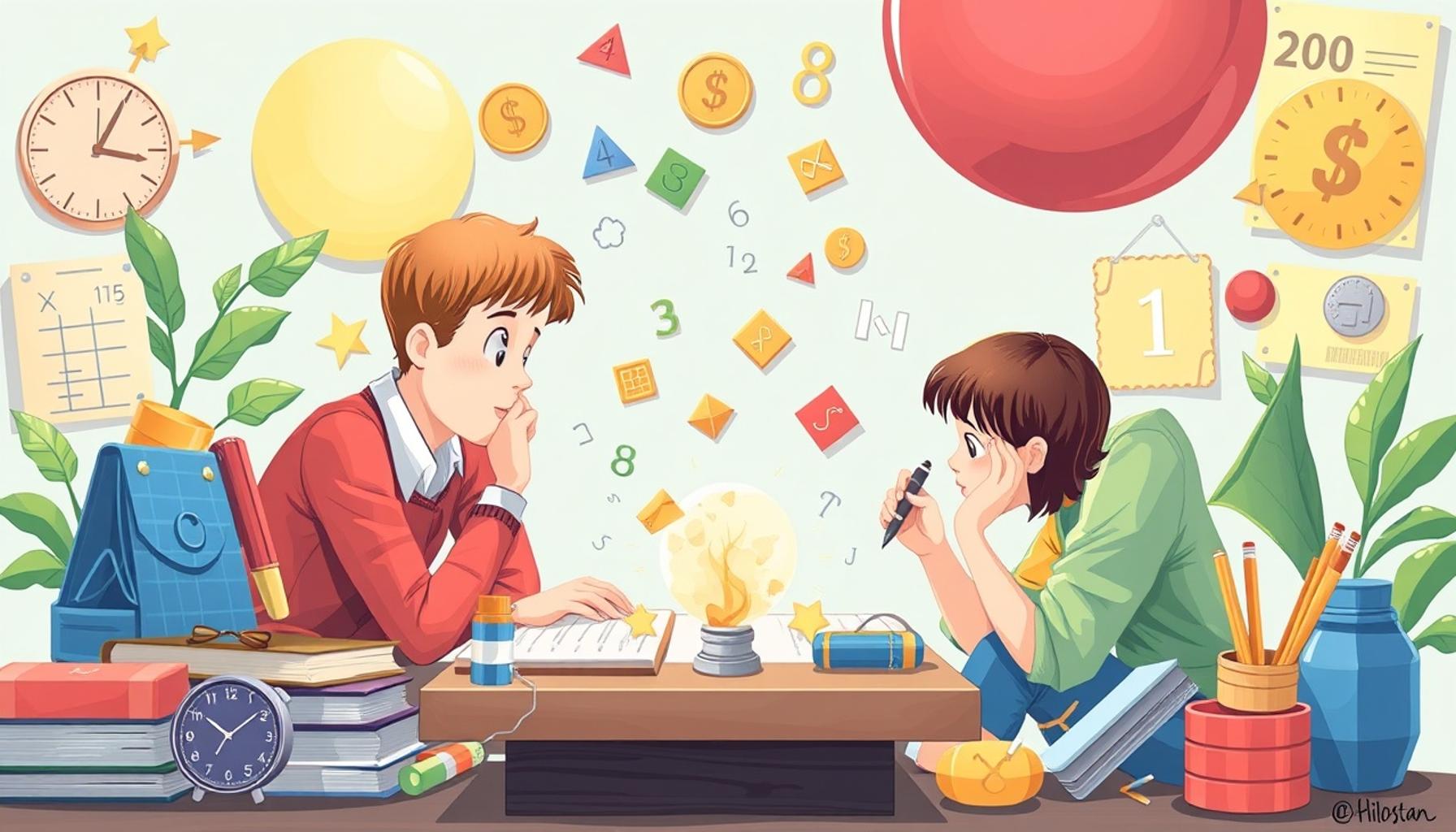
Building a Foundation for Critical Thinking
Mathematical puzzles offer more than just entertainment; they serve as powerful tools for fostering critical skills in children. As they engage with these puzzles, children enhance their problem-solving abilities, build logical reasoning, and cultivate a spirit of perseverance. The world we live in increasingly values analytical thinking, and introducing children to mathematical puzzles early on can equip them with essential skills for future academic and career challenges.
Why Are Mathematical Puzzles Important?
Incorporating puzzles into learning can have significant benefits, including:
- Enhanced Analytical Skills: Puzzles require children to evaluate and break down problems into manageable components. For instance, solving a complex puzzle can teach a child to identify the different parts of a problem and focus on each one systematically, rather than attempting to tackle the entire challenge at once.
- Improved Attention Span: Solving puzzles can lengthen focus and concentration, crucial skills for academic success. Studies have shown that engaging with stimulating tasks similar to math puzzles can heighten attention span, allowing children to maintain focus longer during classroom instruction or homework.
- Encouragement of Creative Thinking: Many puzzles present multiple solutions, promoting innovative approaches to problem-solving. For example, some logic puzzles can be solved in various ways, encouraging children to think outside the box and find unique solutions that might not follow conventional methods.
A Fun Way to Learn
Mathematical puzzles engage children in a fun and interactive manner. They come in various forms, including:
- Sudoku: A game that enhances logical reasoning and pattern recognition. Children learn to place numbers in a grid without repeating them, stimulating their cognitive faculties in a playful way.
- Math Riddles: Challenges that stimulate critical thinking and comprehension. These riddles often bridge fun with mathematics, making kids think deeply about numbers and their relations.
- Logic Games: Activities that require children to apply deductive reasoning to reach conclusions. Games like “Mastermind” or “Set” can sharpen logical deduction skills while providing entertainment at the same time.
These engaging activities not only make learning enjoyable but also help children take initiative in their educational journeys. With structured environments like after-school clubs or family game nights, parents and educators can create opportunities for children to engage with mathematical puzzles. Through puzzles, young learners can unlock their potential, paving the way for lifelong skills that extend beyond the classroom, such as improved decision-making capabilities and increased self-confidence.
Ultimately, a strong foundation in critical thinking can be a game changer for children, preparing them not just for academic success, but for effective participation in an increasingly complex world. By nurturing these skills early, we can ensure our future leaders are ready to tackle the challenges they will inevitably face in life.
The Impact of Mathematical Puzzles on Cognitive Development
Mathematical puzzles are not merely a source of amusement for children; they represent a strategic avenue for cognitive enhancement. As young minds grapple with the challenges presented by these puzzles, they embark on a journey that significantly boosts their critical thinking skills, nurturing a foundation that will support them throughout their educational experiences and beyond. Research suggests that early exposure to problem-solving activities such as puzzles can enhance a child’s cognitive development, laying the groundwork for stronger analytical capabilities.
Cognitive Benefits of Engaging with Puzzles
By introducing children to a variety of mathematical puzzles, parents and educators can spur their intellectual growth in several compelling ways:
- Development of Logical Thinking: Puzzles often require children to follow a sequence of logical steps to find a solution. For instance, a child working on a classic “logic grid” puzzle learns how to connect disparate pieces of information methodically. This practice sharpens their reasoning skills and helps them understand cause-and-effect relationships, which is crucial in mathematics and other academic disciplines.
- Boost in Mathematical Reasoning: Solving math-based riddles can enhance a child’s understanding of mathematical concepts like patterns, numbers, and relationships. Engaging with problems that require mathematical reasoning reinforces classroom learning, making abstract concepts more tangible and relatable.
- Improved Persistence and Resilience: Many puzzles come with built-in challenges that may lead to frustration. However, the journey through these challenges teaches children the value of persistence. As they learn to try different strategies and embrace failures as learning opportunities, they develop resilience—an invaluable skill that serves well in all aspects of life.
Mathematical Puzzles in Everyday Learning
Incorporating mathematical puzzles into everyday learning routines can be seamless and enjoyable. Here are some ways to make puzzles a regular part of children’s lives:
- Incorporation into Daily Activities: Simple puzzles can be integrated into conversations or carried out during outings. For example, while grocery shopping, parents could engage children in estimating totals or identifying patterns in prices on shelves, turning a mundane task into a delightful brain exercise.
- Utilization of Online Resources: Parents can find a plethora of online platforms offering interactive math puzzles tailored to different age groups. Websites specializing in educational games can challenge children while keeping them entertained, all within a safe online environment.
- Encouragement of Peer Collaboration: Organizing group activities where children work together on puzzles can foster a collaborative learning environment. Such interactions help in sharing diverse thought processes and approaches, enriching the problem-solving experience.
By weaving mathematical puzzles into the fabric of daily life, parents and educators can ensure that children not only learn but also enjoy the process of problem-solving. This playful engagement ultimately brings out the natural curiosity within children, motivating them to explore mathematical concepts deeper.
Enhancing Problem-Solving Abilities Through Engaging Mathematical Challenges
Mathematical puzzles serve as an exceptional medium for fostering critical thinking skills in children. They encourage young minds to explore diverse methods for problem-solving, nurturing an adaptive approach to challenges. Engaging with these puzzles allows children to think outside the box, as they require innovative strategies and a deep understanding of concepts rather than mere memorization. With practice, children sharpen their analytical and logical reasoning skills, which are vital not only in academics but also in real-world scenarios.
Collaborative Learning and Social Skills
Mathematical puzzles can also catalyze team-based learning experiences. Whether through classroom activities or family game nights, children working on puzzles together learn to communicate effectively, share ideas, and build consensus on solutions. This collaboration not only enhances their mathematical abilities but also improves their social skills, making them more adept at resolving conflicts and understanding different perspectives. Such rich interactions set a strong foundation for emotional intelligence, which is closely linked to critical thinking and decision-making.
Encouraging a Growth Mindset
Furthermore, tackling complex mathematical puzzles promotes a growth mindset among children. Facing difficulties can lead to feelings of frustration, yet overcoming these challenges fosters resilience. When children view obstacles as opportunities for growth, they develop the confidence to tackle not just mathematical challenges, but any difficulty they encounter. This mindset nurtures perseverance, which is crucial for lifelong learning and success.
Table of Advantages
| Category | Key Features |
|---|---|
| Critical Thinking | Encourages creative problem-solving methods |
| Collaboration | Fosters teamwork and communication skills |
| Resilience | Develops a growth mindset through overcoming challenges |
By incorporating mathematical puzzles into educational contexts, parents and educators can cultivate crucial skills that form an essential part of children’s overall development. These engaging activities make learning enjoyable while significantly contributing to future success.
Fostering Teamwork and Social Skills through Mathematical Puzzles
While individual problem-solving abilities are crucial, mathematical puzzles also serve as an excellent medium for developing social skills and collaboration among children. Working on puzzles in groups encourages children not only to leverage their mathematical abilities but also to enhance their communication and interpersonal skills. This experience can lay the groundwork for strong relationships and teamwork abilities, both essential for personal and academic success.
Collaboration in Problem-Solving
Group activities involving mathematical puzzles present children with opportunities to share ideas and differing methods of approaching a problem. By discussing their thought processes, children can learn how to articulate their reasoning clearly and comprehend others’ perspectives. For instance, in classroom settings, teachers can facilitate small-group discussions around a challenging puzzle. These interactions not only deepen the understanding of the material but also build confidence in expressing thoughts and solutions.
Enhancing Communication Skills
Communication is a cornerstone of successful collaboration. When children explain their puzzle-solving strategies to peers or even younger siblings, they practice articulating complex ideas in easily digestible formats. This skill proves invaluable as they navigate academic and social landscapes. Furthermore, engaging with others can help children develop active listening skills, an essential component of effective teamwork. Such interactions cultivate an environment where questions are encouraged and diverse viewpoints are appreciated.
Building Emotional Intelligence
As children work together to solve mathematical puzzles, they also confront various emotional situations—both exciting moments of triumph and the inevitable feelings of frustration or confusion. Navigating these emotions within a group framework encourages children to practice emotional regulation and empathy. For example, when a child experiences disappointment after failing to solve a puzzle, their peers can offer support and encouragement, fostering a sense of camaraderie. Learning to be supportive in challenging situations can enhance a child’s emotional awareness and understanding of group dynamics.
Promoting Engagement with Real-World Applications
Mathematical puzzles don’t just provide abstract challenges; they can be tied back to real-world scenarios that children can relate to, thereby increasing interest and engagement. For instance, puzzles that involve budgeting a party or planning a trip involve mathematical concepts that are practical and relatable to children. Such connections illuminate the importance of mathematics in everyday life, presenting children with an opportunity to explore problem-solving beyond classroom walls.
Encouraging Lifelong Learning Attitudes
In a world driven by technology and innovation, fostering a love for learning is paramount. Engaging with mathematical puzzles creates a sense of curiosity and a willingness to explore unknown territories. Children develop an appreciation for challenges, learn how to gather information effectively, and begin to understand that problem-solving is a dynamic and creative process. This mindset not only enhances their critical skills but also encourages them to remain open to learning opportunities throughout their lives.
As mathematical puzzles continue to capture the interest of young minds, their role in cultivating critical skills such as teamwork, communication, and real-world problem-solving becomes increasingly significant. By fostering a collaborative and engaging environment, parents and educators can empower children with the tools they need to navigate the complex challenges of the future successfully.
Conclusion: Unlocking Potential through Mathematical Puzzles
In summary, the profound impact of mathematical puzzles on children extends far beyond the mere acquisition of numerical skills. These puzzles are powerful tools that foster critical skills such as analytical thinking, problem-solving, and effective communication, all while encouraging emotional intelligence and teamwork. As children tackle these engaging challenges, they learn to approach problems from multiple angles, enhancing their curiosity and promoting innovative thinking.
Furthermore, by incorporating real-world scenarios into puzzle-solving activities, learners are not only motivated to engage but also able to see the relevance of mathematics in their daily lives. Such connections reinforce the idea that mathematics is not just an academic subject but a vital part of reality, equipping children with the skills they need to navigate future challenges.
The emphasis on collaboration in mathematics learning environments lays the groundwork for children to develop essential social skills, helping them become more effective communicators and empathetic team members. As they learn to support one another through successes and setbacks, they cultivate resilience and the ability to thrive in community settings.
As educational paradigms continue to evolve, integrating mathematical puzzles into everyday learning practices represents a promising step towards nurturing a generation of critical thinkers. In fostering a love for learning through these interactive challenges, we are ultimately empowering children to embrace the complexities of the world with confidence and creativity.
Encouraging parents and educators to incorporate mathematical puzzles into the educational journey is pivotal. As we unlock the potential within each child, we pave the way for future innovators, leaders, and problem-solvers who will undoubtedly shape a brighter tomorrow.