
The Intersection of Thinking Games and Artificial Intelligence: The Future of Cognitive Challenges
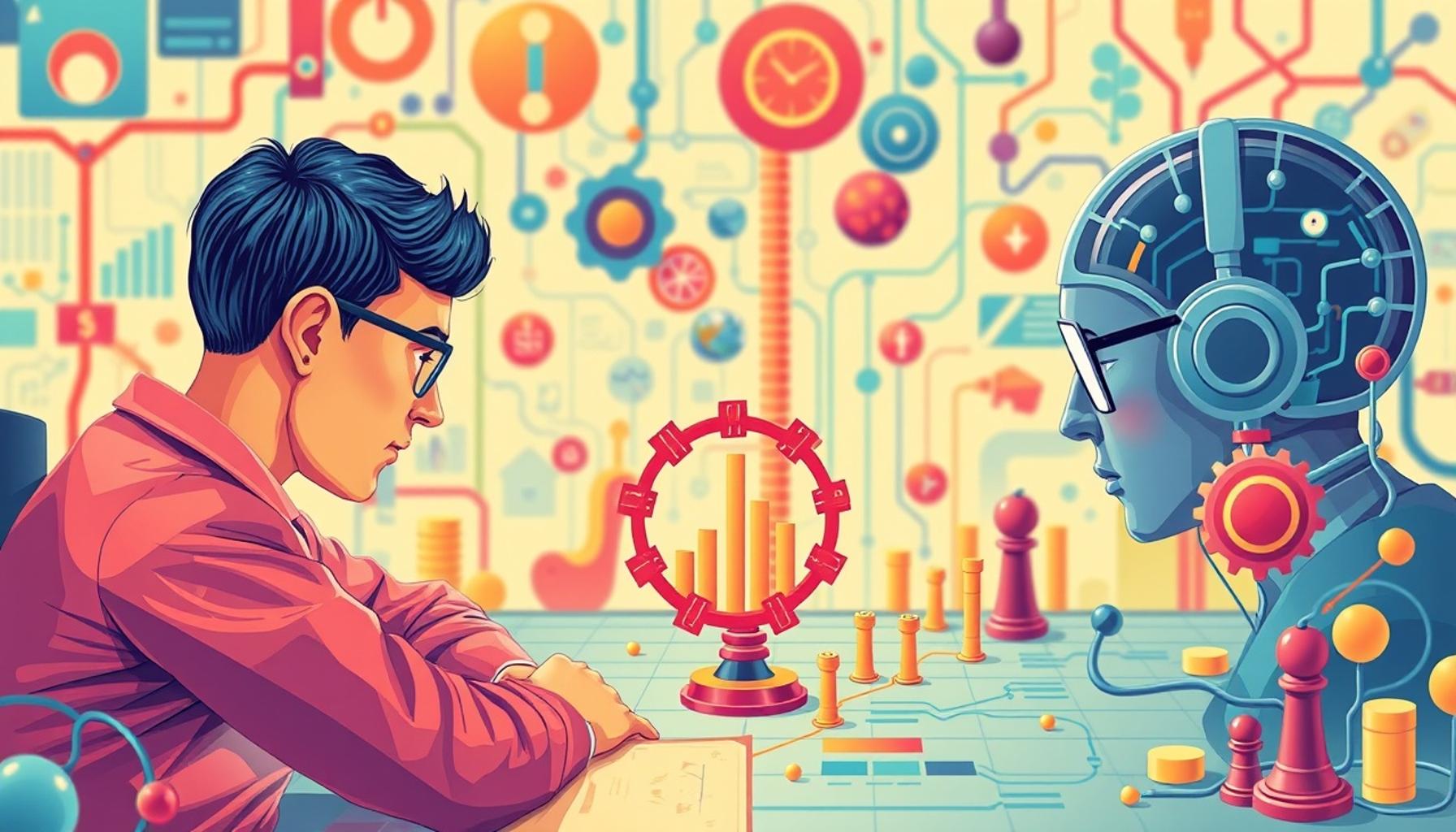
Exploring the Intersection of Thinking Games and AI
In the landscape of cognitive development, thinking games have always served as both entertainment and education. As they continue to evolve, they are increasingly enhanced by artificial intelligence (AI), creating a synergy that cultivates critical thinking and problem-solving skills within players. This transformative intersection not only enriches the gaming experience but also has profound implications for learning environments across the globe.
The Role of AI in Game Development
Game development has undergone a remarkable metamorphosis with the integration of AI technologies. Developers are now utilizing AI to tailor gameplay experiences that resonate with individual players. For instance, games such as “The Last of Us Part II” or “FIFA” implement adaptive AI that adjusts the difficulty based on the player’s skill level. This ensures that newcomers are not overwhelmed while seasoned players can be constantly challenged. Moreover, AI algorithms are also capable of generating expansive, intricate game worlds that respond dynamically to player actions, creating immersive worlds that feel alive and engaging.
Innovative Learning Tools
In the educational sector, AI-powered platforms are crafting interactive thinking games designed to foster analytical and critical thinking abilities among learners. Applications like “Kahoot!” and “Duolingo” leverage AI to create personalized learning paths that adapt to the user’s progress. These tools not only make learning fun but also help in identifying areas where students may need improvement, guiding them toward suitable exercises. Such approaches enhance engagement, making education not just informative but also enjoyable, thus removing the stigma of tedious study.
Engaging in Competitive Play
Furthermore, the emergence of AI opponents in strategic games like chess and Go has revolutionized competitive play. Iconic AI, such as IBM’s Deep Blue or Google’s AlphaGo, showcase how AI has advanced in understanding strategies and calculating millions of outcomes in a fraction of a second. This has led to a new paradigm in which human players are not merely participants but also students—analyzing AI strategies to improve their own gameplay. Thousands of players actively engage with AI systems, refining their skills and pushing the boundaries of what is possible in cognitive challenge environments.
The Future of Cognitive Enhancement
The potential for cognitive enhancement through the intersection of thinking games and AI is vast. By employing advanced technologies like machine learning and neural networks, developers can create immersive experiences that not only foster creativity but also stimulate brain function. These engaging formats encourage users to think outside the box, promoting problem-solving skills that are vital in today’s fast-paced world.
As we look to the future, this unique blend of entertainment and intellectual stimulation opens up exciting avenues for exploration. The growing fusion of AI with thinking games not only enhances individual learning but also holds the promise of reshaping educational strategies worldwide. Players and learners alike can anticipate a future where cognitive challenges are not just routine, but rather, intricate experiences that redefine the essence of learning and decision-making.
AI-Driven Personalization in Gaming Experiences
As the integration of artificial intelligence into thinking games continues to evolve, one of the most significant advancements is the ability to personalize gaming experiences. Personalized design leverages machine learning algorithms to analyze player behavior, preferences, and performance. This data-driven approach facilitates an engaging user experience that resonates with players of various skill levels and backgrounds.
For example, in popular puzzle games like “Portal” or “The Witness,” AI can adapt the difficulty of challenges based on the player’s past performance and decision-making patterns. As players master concepts, the game intelligently introduces more complex scenarios, ensuring continuous growth and learning throughout gameplay. The result is a tailored experience that not only keeps players engaged but also fosters cognitive development in a way that traditional settings may not achieve.
The Science Behind AI Adaptability
The core of AI adaptability lies in its ability to utilize vast datasets to inform decisions in real-time. Through techniques such as reinforcement learning, AI systems learn from player interactions, gradually refining their algorithms to optimize gameplay. This constant feedback loop leads to dynamic game environments that respond intuitively to player choices, thus enhancing the overall experience.
Additionally, AI can analyze player demographics and psychological profiles to implement features that promote motivation and engagement. By delivering appropriately challenging tasks, AI ensures that players are neither bored with insufficient challenges nor frustrated by excessive difficulty. This meticulous balancing act fosters an environment conducive to developing critical thinking and problem-solving skills.
Engaging Players Through Social Connectivity
Moreover, AI enhances the social dimension of thinking games, allowing players to connect with others and compete against a global audience. Features such as AI-driven matchmaking systems in games like “Among Us” or “Fall Guys” ensure that players are paired with opponents of similar skill levels or interests. This not only adds a competitive edge but also enriches gameplay by promoting collaboration and teamwork.
Benefits of AI-Enhanced Thinking Games
The benefits of incorporating AI in thinking games extend beyond mere entertainment. Consider the following advantages:
- Enhanced Learning: Players can develop critical cognitive skills such as decision-making, strategic planning, and resource management.
- Improved Engagement: Personalized experiences keep players motivated and invested in their gaming journey.
- Real-Time Feedback: Instant analysis of player actions fosters a deeper understanding of strategies and mechanics.
- Broader Access: AI can help create inclusive gaming environments, accommodating players with varying needs and abilities.
In essence, the enhancements brought forth by AI not only redefine what is possible within thinking games but also open new avenues for educational implementation and cognitive development. As these technologies advance, the landscape of cognitive challenges is set to become increasingly sophisticated, addressing the needs of a diverse player base while promoting essential life skills.
The evolution of cognitive challenges through thinking games and artificial intelligence is nothing short of remarkable. As technology continues to advance, we find ourselves at the crossroads of complex algorithms and intricate gameplay, creating an environment ripe for exploration. Artificial intelligence (AI) now plays an essential role in enhancing the gaming experience, elevating cognitive challenges to new heights.AI-driven games are becoming increasingly sophisticated, leveraging machine learning algorithms to adapt to user behavior. For example, games powered by AI can analyze a player’s decision-making patterns, adjusting difficulty levels in real-time to offer a personalized experience. This dynamic adjustment not only keeps players engaged but also promotes problem-solving skills by presenting challenges tailored to individual cognitive abilities.Moreover, the integration of AI within thinking games offers significant educational value. Educators can utilize these AI-enhanced games to foster critical thinking and creativity in their students. Such applications can assist learners in developing strategic thinking, enhancing memory retention, and promoting collaboration through multiplayer formats. In a world where cognitive skills are paramount for success, these interactive platforms are paving the way for innovative educational methodologies.As we delve deeper into the implications of this intersection, it is essential to consider the ethical aspects of using AI in gaming. Concerns surrounding data privacy, algorithmic bias, and the potential for addiction must be addressed as the industry evolves. Striking a balance between innovation and ethical considerations will be crucial as we harness the power of AI in cognitive challenges.Exploring further, the future of cognitive challenges is not just limited to entertainment and education. Industries such as healthcare, finance, and customer service can also benefit from applying game-like thinking to solve complex problems. By utilizing AI-driven simulations and thinking games, organizations can train employees to improve decision-making processes, leading to a more adept workforce.The intersection of thinking games and artificial intelligence symbolizes a frontier that invites both curiosity and caution. As advancements continue to unfold, the potential for transformative impact on cognitive development and challenges is vast. This dynamic field holds promise not just for gamers, but for anyone interested in enhancing their cognitive skills, making the conversation around these innovations particularly relevant. With ongoing research and exploration, we can expect that the union of thinking games and artificial intelligence will yield fresh insights and methodologies, reshaping our understanding of cognitive challenges as we move forward into a future rich with possibilities.
AI and the Evolution of Game Design
Artificial Intelligence is not merely a tool for personalization in thinking games; it is also a powerful catalyst driving innovations in game design itself. The incorporation of AI opens pathways to entirely new genres of cognitive challenges, enabling developers to push boundaries and explore uncharted territories in gaming experiences. Over the last few years, we have seen an emerging trend of generative AI—the capability to create unique, dynamic content based on algorithms—that invites players into more immersive, unpredictable, and engaging environments.
Take, for instance, games like “No Man’s Sky,” which leverages procedural generation to create vast, procedurally-generated universes that players can explore. Each player’s experience is one of a kind, with terrain, flora, and fauna dynamically generated by AI algorithms. Such innovations not only enhance the replay value of games but also stimulate players’ cognitive faculties as they adapt to new scenarios and problem-solving contexts created by AI. The essence of creativity in gaming, grounded in deep AI analytics, ushers in an era where thinking games invite players to solve problems in ways that deviate from traditional fixed puzzles.
Cognitive Skill Assessment and Progress Tracking
AI’s role in cognitive challenges also extends to the assessment and tracking of players’ skills. By monitoring performance metrics, AI systems can create comprehensive profiles that illuminate players’ strengths and weaknesses over time. This feature allows not only for tailored experiences but also aids in the creation of targeted training regimens within games. Educational games, such as “Elevate” or “Lumosity,” utilize this AI-driven analysis to track users’ cognitive progress, offering them specialized exercises designed to improve their abilities.
This data can also inform players about their learning trajectories, providing insights that extend beyond the game itself. For instance, AI may indicate that a player excels in logical reasoning but struggles with spatial awareness, suggesting ways to incorporate specific training activities into everyday life that could further enhance those abilities. This comprehensive integration of gaming and cognitive development promises a future where players become more enlightened about their learning processes and capabilities.
AI and Ethical Considerations in Gaming
The intersection of AI and thinking games is not without its challenges and ethical considerations. As AI systems become increasingly intricate, concerns surrounding data privacy and the potential for algorithmic bias also arise. Players’ personal data—captured through gameplay—must be handled responsibly, ensuring that players’ privacy rights are upheld while enjoying personalized experiences. Furthermore, as AI begins to implement cognitive assessments, the implications of labeling players based on performance metrics could eventually influence their engagement and motivation levels.
Developers and designers are now faced with the imperative of creating transparent AI systems that clearly communicate how data is used and how personal attributes are evaluated. Establishing ethical guidelines for AI usage in gaming will be crucial in fostering a trustworthy environment wherein players feel safe and confident. As technology continues to evolve, the responsibility lies on game creators to balance innovation with ethical considerations, so that the cognitive challenges they present are both enriching and fair.
The Vision Ahead: Collaborative Gameplay and AI
Future innovations may also integrate AI in ways that promote collaborative gameplay among users. Imagine a thinking game where AI not only personalizes the experience but also facilitates collaboration by fine-tuning group dynamics based on each player’s strengths. Such a gamified environment fosters teamwork while sharpening cognitive skills, enhancing problem-solving and critical thinking capabilities as players navigate challenges collectively. The prospect of collaborative cognitive challenges, supported by AI, offers a refreshing perspective on how we can harness these technologies to enhance our social interactions through gameplay.
Conclusion: Embracing the Future of Cognitive Challenges
The intersection of thinking games and artificial intelligence is paving the way for a revolutionary landscape in cognitive challenges, where the potential for innovation is bounded only by our imagination. As we’ve explored, AI is transforming game design, creating unique environments that not only captivate players but elevate their mental agility through adaptive challenges. This evolution signals a shift towards engaging gameplay that prioritizes cognitive progression, offering tailored experiences that sharpen skills and promote lifelong learning.
Moreover, the integration of AI into cognitive skill assessments provides invaluable insights into players’ strengths and weaknesses, fostering a more personalized training regimen. As players navigate their gaming journeys, they are better equipped to enhance real-world skills, bridging the gap between virtual challenges and tangible development. However, as we embrace these advancements, an urgent need arises to address the ethical implications of data privacy and algorithmic bias. A transparent approach will nurture trust, safeguarding players’ interests in this new digital landscape.
Looking ahead, the prospects of AI-driven collaborative gameplay hold immense promise, transforming social interactions into rich, productive experiences. As we foster communities that celebrate teamwork alongside cognitive growth, the role of AI will undoubtedly continue to evolve, enriching our understanding of not just gaming but human potential. The future of cognitive challenges lies at the intersection of creativity and technology—where players are not just participants but innovators, explorers, and collaborators in the ongoing quest for knowledge and skill enhancement.