Gamification in Education: Using Mind Games to Foster Learning and Critical Thinking
The Power of Gamification in Education
In the rapidly evolving landscape of education, traditional teaching methods increasingly struggle to retain student interest. As educators look for innovative solutions, gamification has surfaced as a transformative strategy that not only captivates learners but also enhances their educational experience. This approach integrates elements of game design into learning environments, making lessons more engaging and enjoyable.
Engagement is one of the most significant benefits of gamification. By turning routine lessons into exciting challenges and competitions, students become more involved in their learning. For instance, educators can utilize storytelling elements from gaming to create a narrative around math problems or history lessons, allowing students to feel like they are part of an adventure rather than just passive recipients of information.
- Critical Thinking: Gamification encourages students to solve problems from various angles, fostering creativity. In a math game, for example, a student might be presented with a puzzle that requires them to use different formulas to “defeat” an enemy, promoting analytical skills as they evaluate their options.
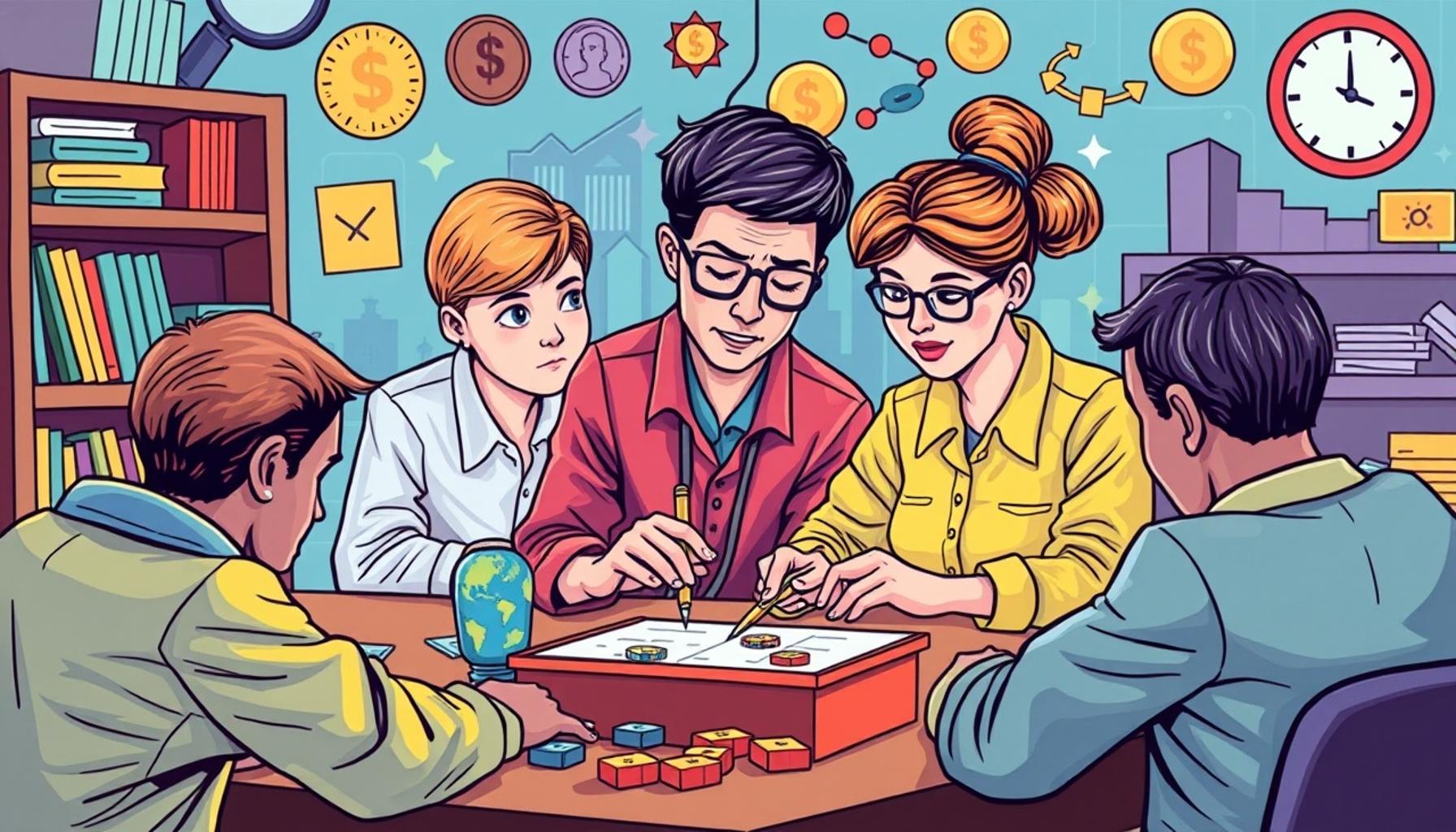
- Collaboration: Many games are designed for teamwork, which helps enhance social skills among students. Class projects that incorporate group challenges simulate real-world scenarios where collaboration is paramount, teaching students to communicate effectively and work towards common goals.
Research has demonstrated that applying game mechanics can lead to higher retention rates and increased motivation among students. In schools throughout the United States, districts have begun adopting programs that blend traditional learning with gamified elements. These programs incorporate mind games, point systems, and achievable rewards. Such strategies not only foster a competitive spirit but also keep the focus on educational objectives.
- Interactive Quizzes: Platforms like Kahoot! revolutionize assessments by transforming them into lively competitions. Instead of dreading a quiz, students look forward to the interactive experience, promoting retention through enjoyment.
- Simulations: Tools like SimCityEDU allow students to navigate complex, real-world scenarios, helping them make critical decisions while learning about urban planning and environmental science. These simulations encourage deeper understanding as students see the consequences of their actions in a risk-free environment.
- Point Systems: By rewarding achievements with point systems, educators can motivate students to strive for their personal best. These systems can encourage friendly competition and perseverance, showing students that hard work has tangible rewards.
As we delve deeper into the world of gamification, it’s clear that mind games can play a crucial role in developing essential skills. By harnessing this innovative approach, educators may profoundly impact learning and critical thinking, paving the way for future generations to succeed in an increasingly intricate world. With the right tools and strategies, the classroom can become a vibrant environment where students not only learn but thrive.
Engaging Minds through Game Mechanics
As the educational landscape shifts towards more interactive learning, the concept of gamification emerges as a critical strategy in capturing student interest and enhancing the learning process. By incorporating game-like mechanics into educational settings, educators encourage students to engage more deeply with the material. This engagement is particularly crucial in today’s digital age, where distractions are abundant and attention spans are fleeting.
One of the most compelling aspects of gamification is its ability to create an immersive learning environment. Through elements such as leaderboards, challenges, and rewards, students are not merely passive recipients of information; they become active participants in their education. This shift transforms the classroom dynamic, fostering an atmosphere of collaboration and competition that motivates learners to excel.
- Instant Feedback: Gamified systems provide immediate responses to students’ actions, reinforcing learning through timely feedback. For example, a math application may highlight errors in real-time, allowing students to correct their mistakes on the spot and understand concepts more thoroughly.
- Goal Orientation: Clear objectives and milestones within a gamified framework help guide students through their learning journey. By setting specific goals—such as completing a project or mastering a skill—students can visualize their progress and stay focused on their achievements.
- Adaptive Learning: Many gamified platforms utilize algorithms to tailor challenges to individual student abilities. This personalization ensures that each learner is adequately challenged and supported, promoting a more effective learning experience.
The incorporation of mind games into educational methods not only enhances engagement but also cultivates essential skills such as critical thinking and problem-solving. For instance, games that require strategy and logical reasoning push students to analyze information critically. As they navigate through complex scenarios, students learn to weigh options, foresee outcomes, and make informed decisions—skills that are invaluable in both academic and real-world settings.
Consider classroom activities that involve simulation-based learning. Utilizing platforms like Minecraft: Education Edition, educators can create environments where students collaborate to solve real-life challenges, such as resource management and problem-solving in environmental science. Such projects not only empathize with content knowledge but also promote essential life skills like teamwork and adaptability.
Moreover, the competitive element inherent in gamification can drive students to strive for improvement. The desire to earn rewards or achieve higher rankings on leaderboards encourages learners to put forth their best effort. This sense of friendly competition can lead to increased persistence, even when faced with challenging concepts. As students race to level up or complete tasks, they are inadvertently honing their resilience and motivation—qualities that are essential throughout their educational journeys and beyond.
In conclusion, gamification offers a wealth of opportunities to revolutionize the educational experience. By leveraging the principles of game design, educators can create a stimulating atmosphere that nurtures not only knowledge acquisition but also the development of critical thinking and problem-solving skills vital for future success. As schools continue to embrace innovative educational practices, the potential of gamification in transforming the learning landscape cannot be overstated.
| Advantage | Description |
|---|---|
| Increased Engagement | Gamification transforms traditional learning into an exciting challenge, motivating students to participate actively. |
| Development of Critical Thinking | Mind games encourage learners to think strategically, solve complex problems, and make informed decisions. |
Incorporating gamification in education has emerged as a pivotal approach in enhancing learning experiences. With the increasing integration of technology in classrooms, educators are now utilizing mind games to promote deeper understanding and retention of knowledge. This dynamic method not only captivates students’ attention but also encourages a collaborative environment where critical thinking flourishes. As students engage with interactive content, they are less likely to disengage or lose interest in subject matter. Instead, they are provided with meaningful challenges that mimic real-life scenarios. Furthermore, gamified environments allow for instant feedback, empowering learners to evaluate their performance and improve continuously. It creates a safe space for experimentation, leading to innovative problem-solving skills that are essential in today’s complex world. Adopting these practices within educational systems can potentially reshape the future of learning. By leveraging the natural competitiveness and positivity associated with games, educators can foster a culture of lifelong learners who are not only knowledgeable but also adept at critical evaluation and thoughtful reasoning.
Game-Based Learning: Expanding Horizons for Students
In the quest to enhance the educational experience, game-based learning has emerged as a valid approach that intertwines well with the principles of gamification. This method enables students to learn through games designed with educational objectives in mind, thereby deepening their understanding of various subjects while simultaneously improving their cognitive abilities. As educators increasingly acknowledge the importance of experiential learning, game-based learning is being recognized as a vital tool in classrooms across the country.
One particularly interesting aspect of game-based learning is its ability to facilitate collaborative problem-solving. For instance, in a history class, students might engage in a game that simulates critical historical events, requiring them to work together to navigate social dynamics and policymaking challenges of the past. This type of collaboration not only enhances their learning of historical content but also fosters communication skills and teamwork—the bedrocks of critical thinking and effective problem-solving.
- Interdisciplinary Learning: Using games that bridge various subjects allows educators to create multidisciplinary experiences. For example, a project-based game might combine elements of mathematics, science, and creative writing, compelling students to utilize diverse skill sets and knowledge bases to succeed in the game.
- Increased Retention: Research indicates that students retain information better when it is learned in a fun, interactive way. When educational content is embedded in gaming scenarios, learners are often more likely to remember key concepts. For instance, programs like Kahoot! allow students to actively engage with material in a tech-savvy, enjoyable format that enhances memorization.
- Social-Emotional Learning: Emotional intelligence is vital for fostering a productive learning environment. Games that emphasize storytelling and character-building can help students develop empathy, resilience, and conflict-resolution skills. For example, role-playing games enable students to navigate realistic scenarios, cultivating their ability to respond thoughtfully in real-life situations.
Furthermore, the recent rise of online platforms, especially during the COVID-19 pandemic, has opened doors for innovative game-based educational tools. Virtual escape rooms, for instance, have gained immense popularity as a fun and engaging way for students to collaborate remotely while still applying critical thinking skills to solve puzzles. This adaptability to remote learning environments speaks to the versatility of gamification in reaching students outside conventional classroom settings.
Data from various studies has shown a notable increase in student engagement and academic performance when gamification is properly integrated into educational curricula. For example, a 2020 study by the Education Development Center found that students participating in gamified learning environments exhibited a 50% increase in motivation levels compared to traditional learning methods. Such figures highlight the sheer potential of gamification as a transformative force in education.
The infusion of gamification in education does not merely revolve around entertainment; it also emphasizes the development of metacognitive skills. As students encounter challenges and setbacks within games, they are prompted to reflect on their thought processes and strategies, fostering a mindset focused on self-improvement and critical evaluation of their approaches to problems. This self-awareness is essential for learners as they navigate academic challenges and apply their skills beyond the confines of school.
Through immersive experiences and interactive formats, gamification adeptly nurtures a generation of students ready to think critically and innovate in an ever-evolving world. By embracing this methodology, educators are not just preparing students for exams but equipping them for real-life challenges, setting them up for future success in diverse arenas.
Conclusion: The Future of Learning through Gamification
As we navigate the evolving landscape of education, gamification stands out as a transformative strategy that enriches student learning experiences while enhancing their critical thinking abilities. The incorporation of game mechanics into educational settings not only increases engagement but also cultivates essential skills such as collaboration, problem-solving, and emotional intelligence. With evidence supporting its effectiveness, educators are increasingly turning to this dynamic approach to create immersive learning environments that resonate with today’s digitally-savvy students.
Moreover, the integration of game-based learning demonstrates a versatile application across various subjects and learning styles. By bridging disciplines, fostering teamwork, and promoting self-reflection, it prepares students for real-world challenges. As remote learning tools gain popularity, the potential for gamification is further amplified, ensuring that education remains engaging and accessible, regardless of the circumstances.
In conclusion, as educational institutions look towards the future, embracing gamification can redefine traditional learning paradigms. This innovative approach not only engages students at deeper levels but also equips them with the critical skills necessary for success in an increasingly complex world. For educators and policymakers, investing in gamified curricula and training can provide a robust framework for preparing the next generation of thinkers, innovators, and leaders. The journey towards an enriched educational future begins with the power of play.